Ropes
By Kiersten Johnson
Physics 212
04/2017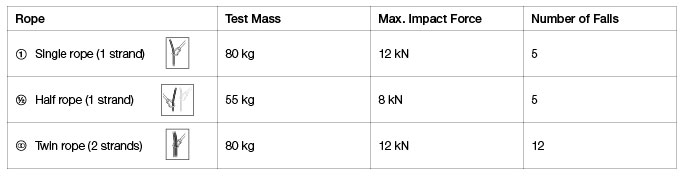
Design by Minimalistic
Design
Chart showing the force different kinds of dynamic climbing ropes can take.
Photo from: https://petzlsolutions.com/technicalsolutions/half-rope-vs-twin-ropeRopes:
Many climbers use ropes. There are several kinds of specialized climbing ropes. All ropes that are marketed as climbing ropes are dynamic.
Climbing ropes are made of a material that can easily stretch, but will not break. When a climber falls the rope will absorb the force, instead of the climber.
Fall factors are used to describe the seriousness of a fall. The fall factor ranges from 0-2, and it defined at Fth=(fall length/rope out). The factor cannot exceed 2 because the amount of rope out will always be twice the fall length.
Ropes are tested to withstand a great deal of force. More than a human should be able to produce, to ensure the rope will not break.
Many climbers use ropes. There are several kinds of specialized climbing ropes. All ropes that are marketed as climbing ropes are dynamic.
Climbing ropes are made of a material that can easily stretch, but will not break. When a climber falls the rope will absorb the force, instead of the climber.
Fall factors are used to describe the seriousness of a fall. The fall factor ranges from 0-2, and it defined at Fth=(fall length/rope out). The factor cannot exceed 2 because the amount of rope out will always be twice the fall length.
Ropes are tested to withstand a great deal of force. More than a human should be able to produce, to ensure the rope will not break.
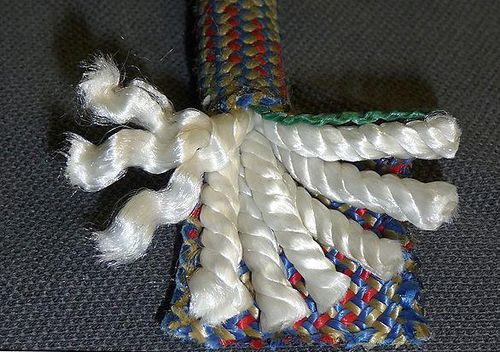
Dynamic climbing rope cut to expose the core.
Photo from: https://it.wikipedia.org/wiki/Corda_(alpinismo)