Home Lift Drag Banking Engines Missiles Bibliography
Banking

http://giphy.com/gifs/jet-top-gun-air-force-jB4N7DFpSSz8Q
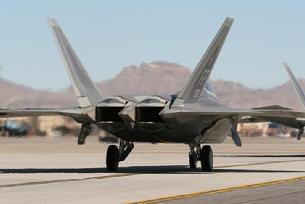
Fighter planes bank in order to turn. Banking is an important maneuver for modern fighter jets because it helps them evade return fire and it helps them align into formations. Older fighter jets utilize wing flaps to control banking, but modern jets, such as the F-22 Raptor can also utilize thrust vectoring. By changing the direction of the engine, the F-22 can increase its ability to turn. Banking is a simple process which involves the force of lift.
http://www.aerospaceweb.org/question/performance/q0146.shtml
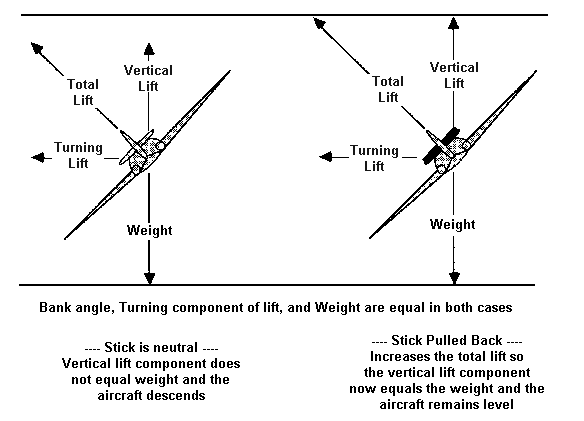
By tilting the plane
sideways with the use of wing flaps, the lift force
generated by the wings is moved at an angle. Having
the lift force tilted segments the force into two
components, vertical lift and horizontal lift. The
horizontal lift generates the turning motion and the
vertical lift keeps the plane in the air. However, due
to the fact that vertical lift is less than the total lift,
the plane would descend due to gravity if extra lift is not
generated. In order to prevent the plane from
descending, extra lift must be generated so that the
vertical lift is equal to the weight of the plane.
The thrust vector is an extra factor
for jet maneuvering. It allows a jet to make sharper
turns, enhancing its agility. When the pilot alters
the direction of the engine, he directs the force
accordingly. For instance if the thrust of the
engine is pointed upwards, the rear of the plane will
experience a force downwards allowing the plane to make a
sharp turn.