As most of us know, friction is the
resistance one object feels while moving over another. Now you
may think that there are no objects moving over other objects
in pool, but think about it. When you use the cue stick to hit
the cue ball, because the ball is round, the cue stick wants
to slide away from the your desired hitting location after
collision. So to help deal with this problem, we have
friction. Friction is defined mathematically by the normal
force of the object multiplied by the static(not moving) or
kinetic(moving) coefficient of friction. The normal force
is typically known as the force perpendicular to the surface
created by an object. For example, the force that prevents a
box to fall through the Earth as it is resting on the Earth.
The coefficient is what we know as traction. Each object has a
differing coefficient depending on the traction is can
produce. There are two friction forces that are interesting to
us. The first is the friction from the felt as the ball moves
forward. This friction resists the ball from moving, and that
is about all there is to it. It is also the reason people like
to keep their pool tables clean, as more stuff could cause
more friction. The other friction is the one players want to
know about.
Intuitively you know that a smooth cue ball and a smooth point
of a cue stick do not have a lot of traction correct? So
to prevent slippage, pool players apply chalk to the point of
their cue sticks. Another chalk similar to the type
weightlifters use is also sometimes applied to the handle of
the stick. Pool sticks are also often made with spaced out
rope so that the player can have a maximum amount of grip.
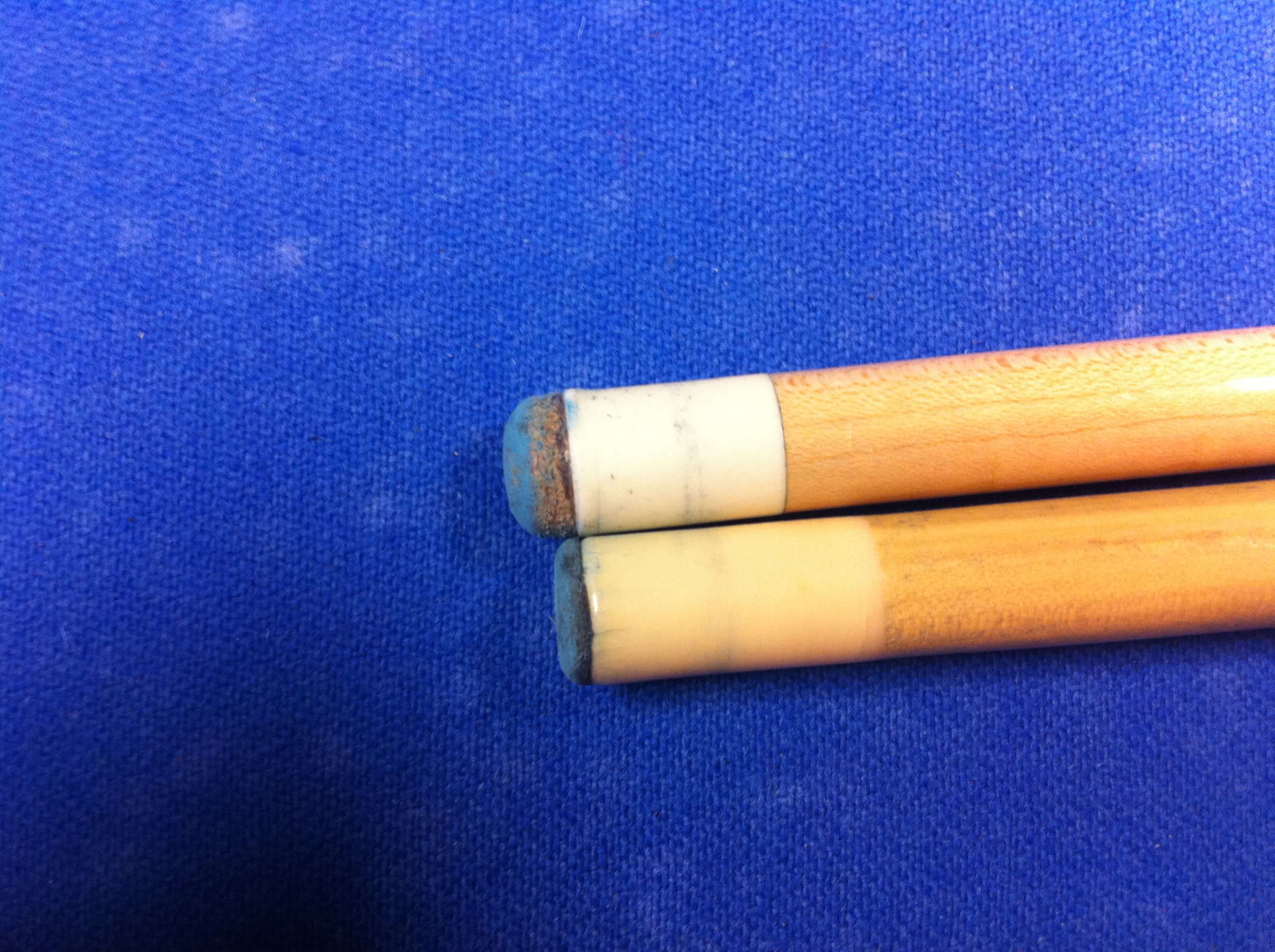
Here we have two differing pool sticks,
both fairly chalked up. Which sticks is more likely to slide
over the top of the ball upon collision?
You said the the rounded one right!? Again, intuitively
we know that it is easier slide your hand across a surface
that is rounded, and more difficult to slide our hand
across something square. But having the most fiction is
not everything. Professionals also care about spin, which
we will be jumping into on the next page!