The thermal regime- before and after
- The term "thermal regime" refers to the thermal patterns found in a strata of soil. To understand the thermal regime, we have to have a rudimentary understanding of the physics of heat. Heat is a measure of the kinetic energy possesed by the molecules of matter. We can relate to this concept by our understanding of hot and cold. Fire is hot. Ice is cold. Hot and cold are ways of classifying the relative heat or thermal energy of a substance. When a given mass of something that is cold is in contact with a given mass of something that is hot, they are said to be in thermal contact. Heat will "flow" from the hot stuff into the cold stuff until they reach an equilibrium point (or, conversely, cold will flow into the hot stuff). When they reach a state of thermal equilibrium they will both be the same temperature. With this concept in mind, we can ponder the thermal regime of Alaskan Permafrost.
YO!!check out this diagram I swiped from the Army Corps of Engineers. It's pretty self explanatory. It shows the relationship between clearing of natural vegatation/ground cover and permafrost meltoff.
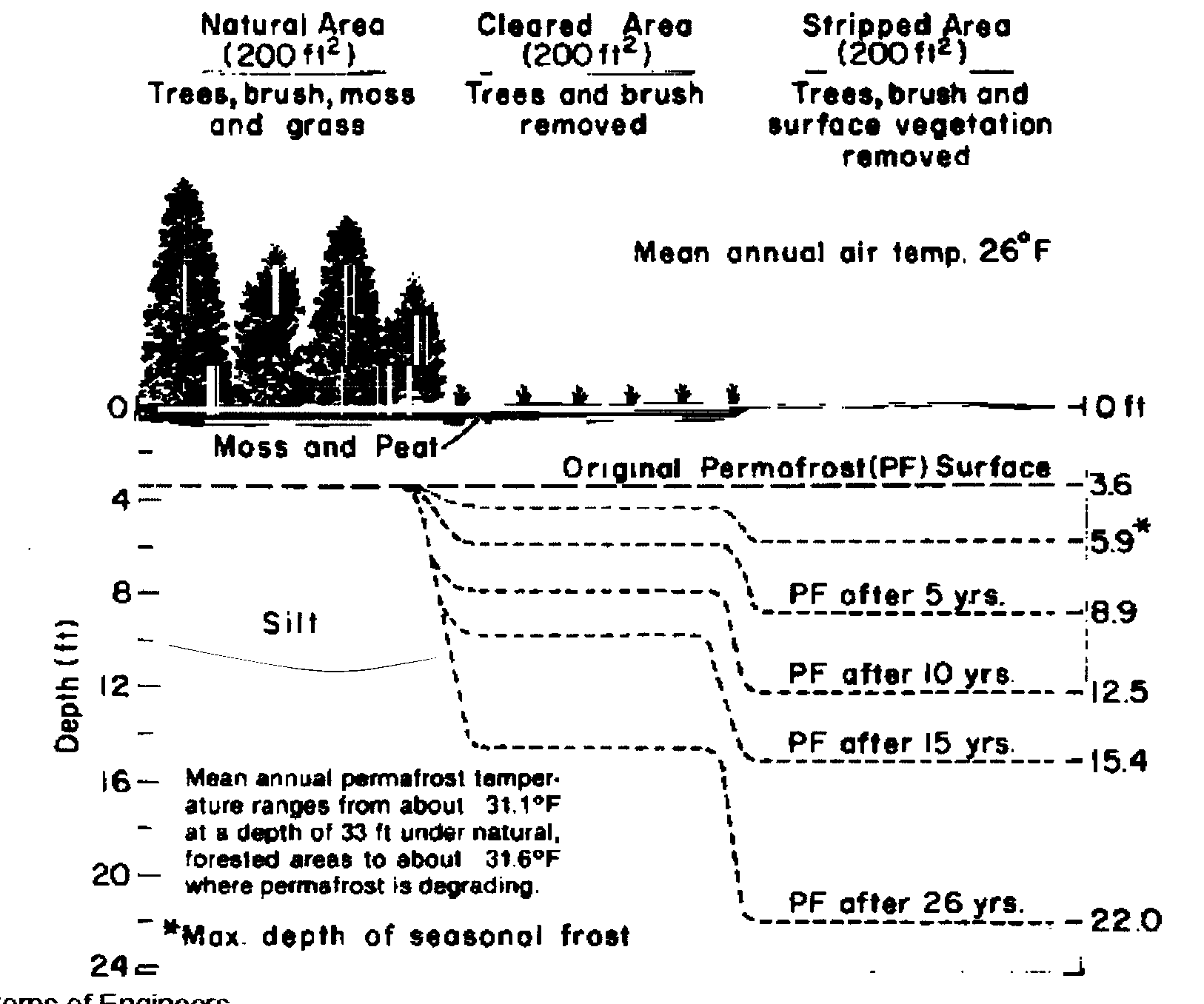
- The type of ground that we call permafrost is constantly in thermal contact with the above ground atmosphere. During the eight or so months of winter, the frozen ground, at an average temperature of 31.5 degrees F is quite warm relative to the ambient atmosphere, which is usualy at about 0 degrees F. During this time, the permafrost surrenders much of its' "heat" to the atmosphere. Yet during the four or so months of summer, the ground does not melt. Why is this so? To understand why, we must look at the vertical composition of the ground. The frozen ground will be in a layer that is pretty thick, quite often 50 feet or more deep in these parts. On top of the permafrost is a layer of ground that freezes and thaws annualy- the active layer. The active layer is typicaly thin relative to the depth of frozen soil. On top of the active layer is a layer of spongy, mossy vegetation- about a foot deep. This organic mat traps a lot of stagnant air and serves as an excellent insulation that helps to retard the thermal contact between the air and the ground beneath. In addition to its insulating qualities, the organic mat also cools through evaporation. A sheet of water sits on top of the frozen soil (permafrost is impermeable to water), where it is wicked up through the moss, and evaporates. This process cools the ground beneath much in the way the persperation process cools our skin. Lastly, there is a forest growing up from the moss, usualy comprised of stunted black spruce. The forest canopy shrouds the ground from the radiant heat of direct sunlight. As you can see, the natural ecosystem plays an important role in ensuring the stability of the frozen soil beneath. This relationship between soil, ice, water, vegetation, and the thermal interaction between them, is known as the thermal regime.
- When a road is built over permafrost, the harmony of the natural thermal regime is radicaly altered. One of the first tangible undertakings of road construction is the process of clearing and grubbing. This process involves the removal of all vegetation from the building area (remember, the vegation plays an important in keeping the permafrost cool). The trapezoidal shape of the road embankment forms an edifus that is fully exposed to the radiant heat of the sun. Furthermore, the asphalt pavement absorbs heat due to its' black color. The road is a virtual thermal magnet that delivers heat to the frozen subsoil, unfettered by the insulating qualities of natural vegetation.
There's more to it than this, though During the winter, snow is plowed from the roadway. The snow accumulates on the road shoulders, and forms an insulating mat. This insulation is detrimental to the existence of the permafrost strata, for it prevents the cold winter air from "cooling" the soil beneath. In addition to this, the mass of the road is a new load that wasn't present originaly. As the ground melts and turns to unstable mud, the enormous weight of the road embankment hastens the settlement process. In conclusion, the natural thermal regime is responsible for the existence and survival of permafrost. The construction of the road structure drasticaly alters the all important thermal regime, allowing accelerated thermal contact between the soil and the air. Now it's time to see how this situation is dealt with

