Lift
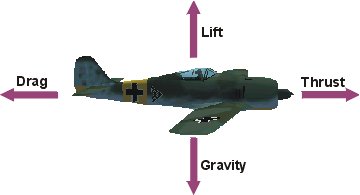
Warbirds
Up, Up and Away! So your paper airplane takes to the air and glides gentely to the ground but you still don't understand how it is able to glide. Your paper airplane uses lift to carry it through the air and to its landing area. Now you are interested and want to know how lift works. The lift for your paper airplane doesn't work quite the same as a real airplane but understanding how an airplane maintains lift is useful. Now something important to remember is that lift can only happen when in the pressense of a moving fluid and that air has fluid properties.

Warbirds
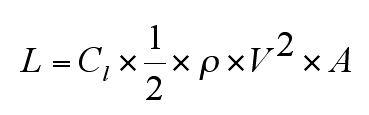
By looking at the picture above, the basic concepts of lift for an airplane is seen. The air that is flowing splits to move around a wing. The air that that moves over the wing speeds up creating lower pressure which means that the higher pressure from the air moving slower under the wing pushes up trying to equalize the pressure. The lift generated can be affected by the angle at which the wing is moving into the flowing air. The more surface area of the wing resisting against the flow of air can either generate lift or make the plane dive. This can be easily simulated in everday life. Next time you are riding in a car with someone stick your hand out the window. Have your fingers pointing in the direction of the motion of the vehicle. Now move your hand up and down slightly. You can feel the lift and drag that your hand creates. There is an equation to solve for what the force of lift is as seen here:
How Stuff Works